

ARCHEOLOGISTS have unearthed a piece of Enfield history on a dig at the former palace of Henry VIII.
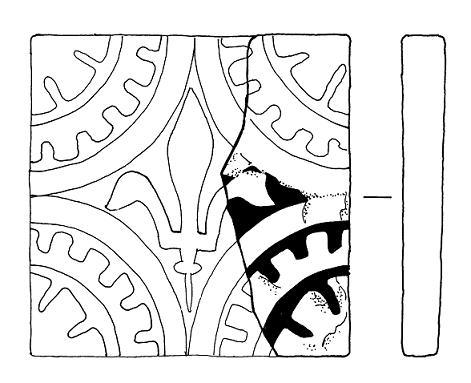
An excavation around the site, on the grounds of Forty Hall, where Elsyng Palace once sat, has uncovered a fragment of one of the first high status glazed English tiles used by the rich to show off their importance.
Archaeologist Dr Martin Dearne, who has been part of the dig, said the discovery showed the site was noteworthy even before the king’s notorious rule.
He said: “We knew the Elsyng site became the royal palace but we don’t know about its importance early on. We now know it had been important for hundreds of years.
“The assumption has got to be that it would have been an important manor house.”
He said it would likely have been home to a lord controlling the surrounding area.
The tile was made in Penn, in Buckinghamshire, between 1350 and 1390, and is the second big discovery of the dig.
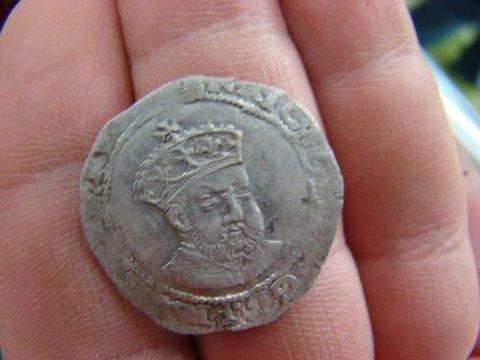
The team also found a silver coin, known as a half groat, worth the equivalent of around £20, with Henry VIII’s face on it.
Dr Dearne said: “Taking the top soil off, as we lifted the turf there was something silver. To be honest I thought it was a 20p piece at first but as soon as we picked it out it was clear it was a coin of Henry VIII.
“We were delighted because it’s actually very rare to find a silver coin on archaeological excavations. It was an awful lot of money in those days and most of the ones that got lost got found again.”


Comments: Our rules
We want our comments to be a lively and valuable part of our community - a place where readers can debate and engage with the most important local issues. The ability to comment on our stories is a privilege, not a right, however, and that privilege may be withdrawn if it is abused or misused.
Please report any comments that break our rules.
Read the rules here